
World News
Halle Berry’s Catwoman: Reflecting on Criticism, Resilience, and the Evolution of a Cult Classic
Aug
1. The Making of Catwoman: A Bold Leap into Superhero Cinema
When Catwoman was released in 2004, it marked a significant moment in Halle Berry’s career. Fresh off her Academy Award win for Monster’s Ball and her role as Storm in the X-Men franchise, Berry was at the peak of her career. The decision to take on the role of Catwoman, one of DC Comics’ most iconic characters, seemed like a logical next step for the actress, blending her proven ability in dramatic roles with the rising popularity of superhero films. However, the journey from script to screen was fraught with challenges, ultimately resulting in a film that would become one of the most criticized in the genre.
Directed by Pitof, a French visual effects artist-turned-director, Catwoman was envisioned as a modern reimagining of the character, distinct from the darker, more gothic portrayal by Michelle Pfeiffer in Batman Returns. The film aimed to bring a fresh perspective to the superhero genre by focusing on a new version of the character, Patience Phillips, a mild-mannered graphic designer who transforms into Catwoman after a mystical encounter with a mysterious cat. The film was intended to be an empowering narrative about self-discovery and liberation, with Berry’s character breaking free from societal constraints to embrace her true identity.

However, from the outset, Catwoman faced an uphill battle. The script underwent numerous revisions, and the production was plagued by creative differences and budgetary constraints. The final product was a film that, while visually ambitious, struggled to find its tone and narrative coherence. Despite Berry’s dedication to the role, including rigorous physical training to embody the agility and strength of Catwoman, the film was met with overwhelmingly negative reviews from critics and audiences alike.
2. Facing the Backlash: Halle Berry’s Response to Catwoman Criticism
Upon its release, Catwoman was widely panned by critics, with many calling it a disappointment, especially given Berry’s involvement. The film’s dialogue, plot, and special effects were heavily criticized, and it quickly became the target of jokes and derision. For Halle Berry, who had poured her heart and soul into the project, the backlash was both unexpected and difficult to bear. However, rather than shying away from the criticism, Berry chose to confront it head-on, demonstrating resilience and a sense of humor that would come to define her response to the film’s reception.
In a move that shocked Hollywood, Berry attended the 2005 Golden Raspberry Awards, where Catwoman was nominated for and won several Razzies, including Worst Picture and Worst Actress for Berry. In her acceptance speech, Berry famously clutched her Oscar in one hand and the Razzie in the other, delivering a humorous and self-deprecating speech that acknowledged the film’s flaws while also poking fun at herself. Berry’s willingness to embrace the criticism and laugh at her own expense earned her a newfound respect from both fans and critics, demonstrating her grace under pressure and her ability to rise above the negativity.
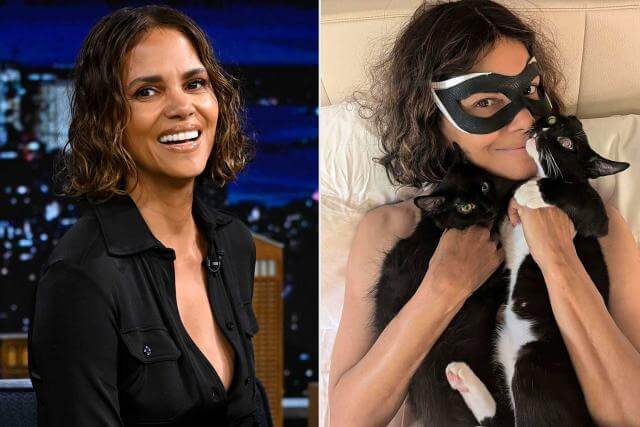
In recent years, Berry has continued to reflect on the experience with a sense of perspective and wisdom. In various interviews, she has spoken about how Catwoman was a learning experience for her, both personally and professionally. She has acknowledged that the film did not turn out as she had hoped, but she has also expressed pride in her work and the effort she put into the role. For Berry, Catwoman was a stepping stone in her career, one that taught her valuable lessons about the importance of creative control and the unpredictable nature of Hollywood.
3. The Cult Status of Catwoman: From Box Office Flop to Guilty Pleasure
Despite its initial failure at the box office and the harsh reviews it received, Catwoman has, over time, developed a cult following. What was once dismissed as one of the worst superhero films of all time has found new life among fans who appreciate the film’s campy charm and over-the-top style. For many, Catwoman is seen as a guilty pleasure—a film that is so bad it’s good. This ironic appreciation has led to a re-evaluation of the movie, with some fans even arguing that it deserves more recognition for its boldness and its attempt to do something different within the superhero genre.
Part of the film’s enduring appeal lies in its unabashed embrace of its own absurdity. From the extravagant costumes to the stylized action sequences, Catwoman is a film that doesn’t take itself too seriously. This self-awareness, coupled with Berry’s committed performance, has endeared the movie to a new generation of viewers who see it as a fun, if flawed, piece of entertainment. The film’s campy dialogue and exaggerated characterizations have also made it a popular subject for memes and online parodies, further cementing its status as a cult classic.
Moreover, Catwoman has gained a certain level of respect for being one of the few superhero films of its time to feature a female lead, especially a woman of color. While the execution may have been lacking, the film’s focus on a strong, independent female protagonist was ahead of its time, paving the way for more diverse representation in the genre. In this sense, Catwoman can be seen as a precursor to the modern wave of female-led superhero films that have since become more common in Hollywood.
4. Halle Berry’s Career Post-Catwoman: Rebuilding and Reinvention
Following the disappointment of Catwoman, Halle Berry’s career could have easily taken a downturn. However, Berry used the experience as an opportunity to reassess her career and refocus on roles that aligned with her artistic goals and personal values. In the years since Catwoman, Berry has taken on a diverse range of roles, from action-packed blockbusters to critically acclaimed dramas, demonstrating her versatility and resilience as an actress.
One of Berry’s most notable roles post-Catwoman was her performance in Cloud Atlas (2012), where she played multiple characters across different time periods and settings. The ambitious film, directed by the Wachowskis and Tom Tykwer, showcased Berry’s ability to tackle complex and challenging roles, further solidifying her status as a talented and dedicated actress. Her performance in the film was widely praised, and it marked a significant turning point in her career, allowing her to move beyond the shadow of Catwoman.
Berry has also continued to explore her passion for action roles, starring in films such as The Call (2013) and the John Wick franchise, where she has impressed audiences with her physicality and commitment to her characters. These roles have allowed Berry to reclaim her place in the action genre, proving that she is more than capable of leading a film and delivering powerful performances.
In addition to her work in front of the camera, Berry has also ventured into producing and directing, further expanding her influence in the industry. Her directorial debut, Bruised (2020), in which she also starred, received critical acclaim for its raw and gritty portrayal of a former MMA fighter struggling to regain custody of her son. The film was a passion project for Berry, who spent years developing it and training for the physically demanding role. Bruised not only showcased Berry’s talents as an actress but also demonstrated her capabilities as a filmmaker, marking a new chapter in her career.
5. The Evolution of Superhero Cinema: Catwoman’s Place in the Genre’s History
In the nearly two decades since Catwoman was released, the superhero genre has undergone a significant transformation. What was once a niche genre has become a dominant force in Hollywood, with Marvel and DC films consistently topping the box office and shaping popular culture. The evolution of superhero cinema has also brought about greater diversity in terms of representation, with more female-led and minority-led films being produced and celebrated.
While Catwoman may not have been a critical or commercial success, its place in the history of superhero cinema is undeniable. The film was one of the first attempts to center a superhero narrative around a woman of color, a bold move that was not fully appreciated at the time but is now recognized as an important step towards inclusivity in the genre. In this sense, Catwoman can be seen as a trailblazer, paving the way for future films like Wonder Woman (2017) and Black Panther (2018), which have been celebrated for their diverse representation and empowering messages.
As the superhero genre continues to evolve, Catwoman serves as a reminder of the risks and challenges involved in breaking new ground. While the film may have stumbled in its execution, it was a pioneering effort that deserves recognition for its ambition and its role in pushing the boundaries of what a superhero film could be. Halle Berry’s portrayal of Catwoman, though initially met with criticism, has since been re-evaluated as a performance that, despite the film’s flaws, embodied the strength and complexity of the character.
In retrospect, Catwoman can be viewed not just as a film that “sucked balls,” as its harshest critics claimed, but as a flawed yet significant entry in the superhero canon—one that reflects the growing pains of a genre finding its way towards greater inclusivity and diversity. For Halle Berry, the experience of Catwoman was a challenging but ultimately valuable part of her journey, one that taught her resilience, humility, and the importance of staying true to her artistic vision, regardless of the outcome.
From haotees
